Melbourne’s Trams, Preserved in a Paddock Near Ballarat
On a rural block at Haddon, ten minutes south-west of Ballarat, a small band of volunteers has spent five decades keeping a fleet of Melbourne’s classic electric trams alive — complete with their own working tramway to run them on.
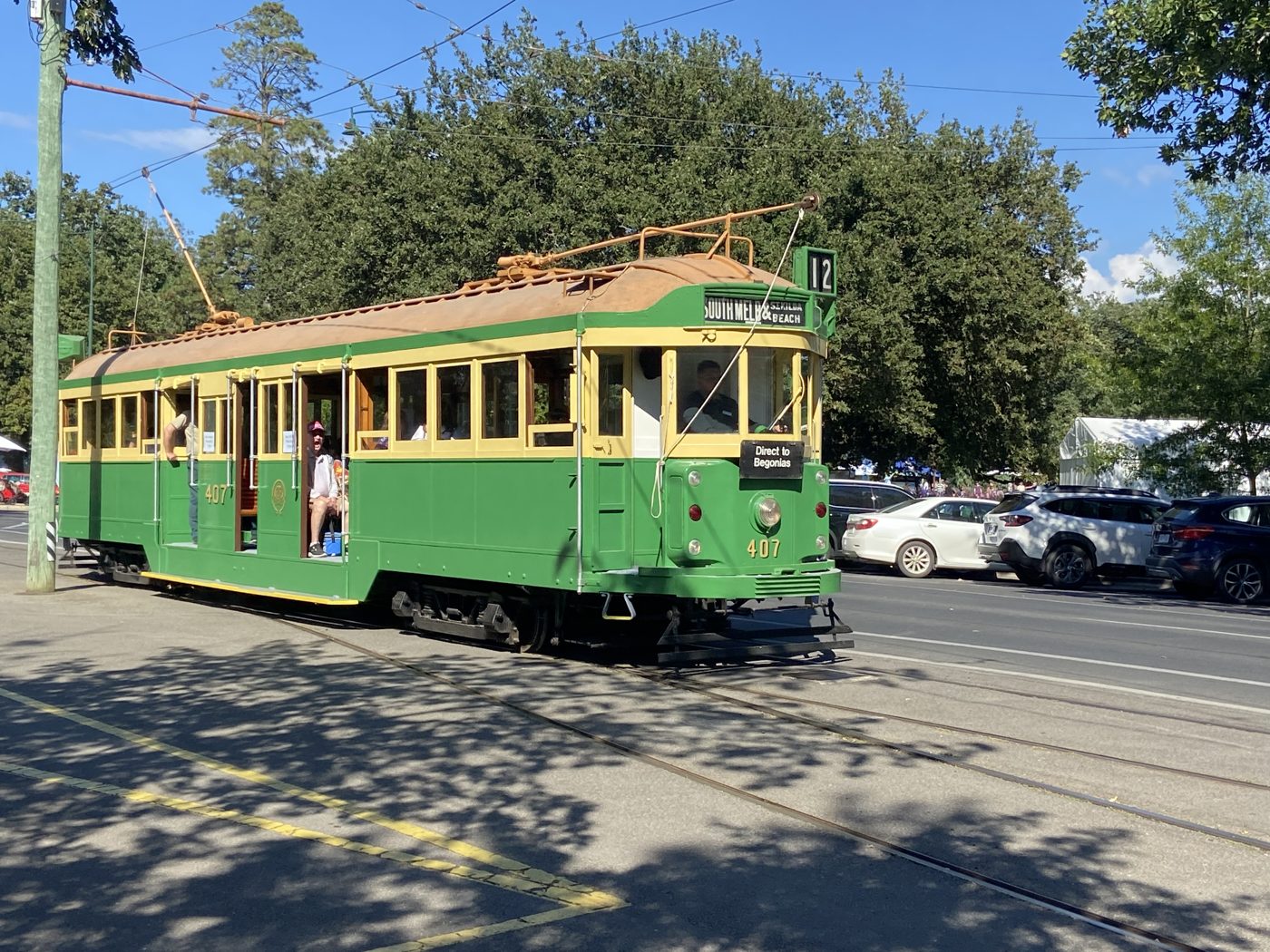
The story begins in late 1974, when a group of enthusiasts formed the Haddon Tramway Workshops and bought land on Sago Hill Road with an ambitious plan: not just to store retired tramcars, but to build a genuine operating electric tramway for them. That group became the Melbourne Tramcar Preservation Association Inc., incorporated in 1984, and their Haddon site grew to include a carbarn, workshop, substation and roughly 650 metres of running track with overhead wire.
This site carries on the story that the Association’s much-loved website told from 1998 to 2022 — the history and technical details of every tramcar preserved at Haddon, the major restoration projects, and the patient craft of building and maintaining real tramway track and overhead by volunteer hands. The old pages live on here at their original addresses, rewritten and refreshed for a new generation of readers.
The Fleet at a Glance
VR Tram No. 41
A 1923 bogie dropcentre car from the St Kilda–Brighton Beach railway tramway, rescued from a Brighton backyard and returned to working order.
L 103
Built 1921 by James Moore & Sons, one of six L-class cars, restored to its late-1950s appearance.
W2 357
The last tram built entirely at the Holden Street Tramway Workshops, in service from 1926.
W2 407
Rebuilt at Preston Workshops after a 1972 collision, preserved in its later-life form.
W3 663
A 1933 steel-framed dropcentre car, subject of a major roof and body restoration.
W4 670
One of only five W4s built — the first of Melbourne’s ‘wide body’ trams, and the Association’s first complete restoration.
W5 792
A remarkably original 1937 three-doorway W5, repatriated from Sydney in 2013 and under restoration to as-built condition.
SW5 849
A 1940 sliding-door car donated by VicTrack in 2008 and returned to operating condition at Haddon.
A Century of Electric Trams
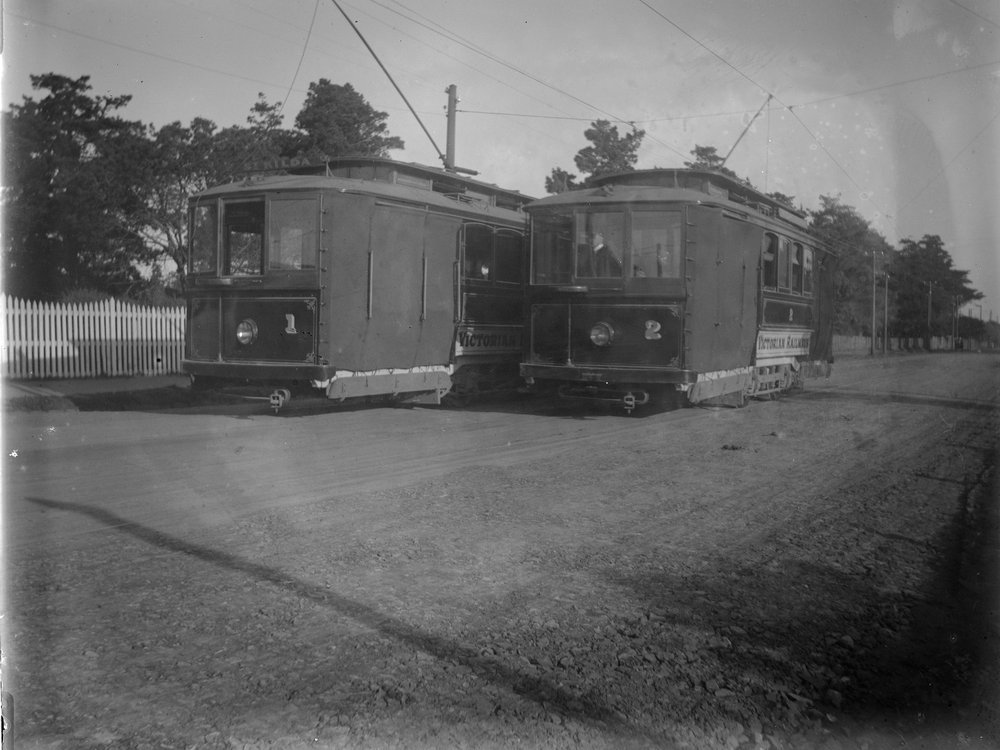
The story these trams tell reaches back over a hundred years — from the Victorian Railways’ pioneering electric street railway of 1906, whose early cars are pictured above, to the W-series design that defined Melbourne’s streets for most of the twentieth century.
Start Exploring
- A fifty-year history — from bare paddock to official tramway opening.
- Building the Haddon Tramway — how volunteers lay and rebuild real tram track.
- Restoring W3 663 and returning SW5 849 to service.
- Visiting Haddon and the tram heritage of the Ballarat district.